Barry
YOUR PERSONAL VIRTUAL ASSISTANT
Neurofeedback software with advanced functionality
Barry is free of charge to all students who have completed one of our training programs.
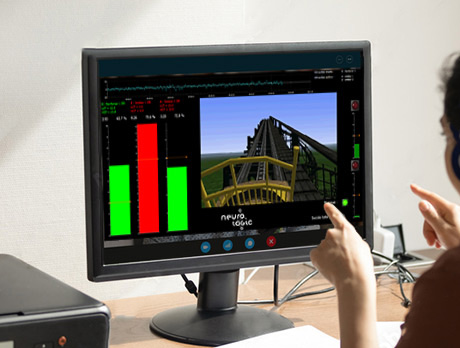
Barry is our software specifically designed for evaluations and training. It serves as your personalized virtual assistant, meticulously crafted to support your neurofeedback practice. Barry comes with 3 hours of video tutorials to help you become familiar with its use and, more importantly, to maximize its full potential.
We regularly update Barry based on feedback to ensure you get the best of the best.
We also offer Barry+, a program that provides you with a brain map for intuitive qEEG interpretation. It includes a range of unique features designed to enhance your training experience.
*Barry and Barry+ are designed for use with ProComp encoders from Thought Technology*
Barry Sterman is one of the pioneers and key creators in the application of quantitative electroencephalogram (qEEG) techniques. During his research on epilepsy, he discovered the potential of this tool. By focusing on neuroplasticity, operant conditioning, and the ability of patients to modify their own brain activity, he demonstrated the clinical utility of neurofeedback (via qEEG). He trained and supported the first pioneers in this field. His research, rigor, perseverance, and creativity played a pivotal role in democratizing neurofeedback, making it accessible to many.
Our software, Barry, was designed based on these same principles, making it the perfect virtual assistant.
Barry's functionality
Neurofeedback software for pros
1. Conduct a 10 site "mini-Q" or a sequential 19-site "full-Q"
2. Artifact data and interpret results
3. Apply your personalised protocol
Optimized by expert practitioners to perform qEEG assessments and training sessions.
Allows for precise and engaging analysis and interpretation of collected data.
An ergonomically designed interface for the comfort of both practitioners and patients.
Regular updates to enhance the software.
The hardware
NeuroLogic offers you the best tools, backed by expert-quality support.
Your essential kit
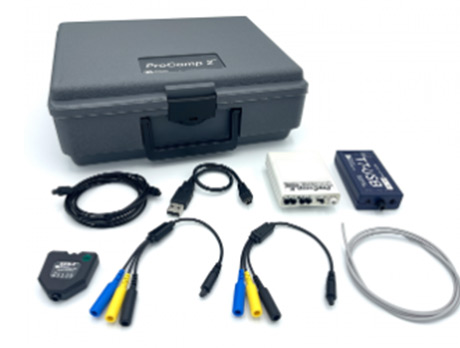
The ProComp 2 from Thought Technology allows for a basic evaluation (10 or 19 sites) and serves as your primary tool for conducting neurofeedback training. As such, this system is an essential component of your neurofeedback practise. For practical application, this single device is sufficient.
Integrated with your virtual assistant Barry and Barry+, the ProComp 2 facilitates result interpretation, the creation of tailored protocols, and the implementation of ergonomic and effective training sessions.
Your advanced setup
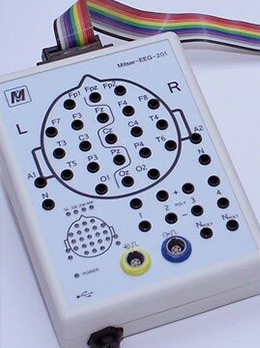
The Mitsar 201 enables advanced (19 site “full-cap”) assessments, providing greater precision in data collection. The process is faster and easier to perform thanks to an optimized sensor cap.
Paired with the NeuroGuide normative database, the Mitsar facilitates comparison with normative data, qEEG interpretation, and the development of personalised training protocols.
*Generally speaking, you can't train with a Mitsar system*
The normative database
NeuroGuide
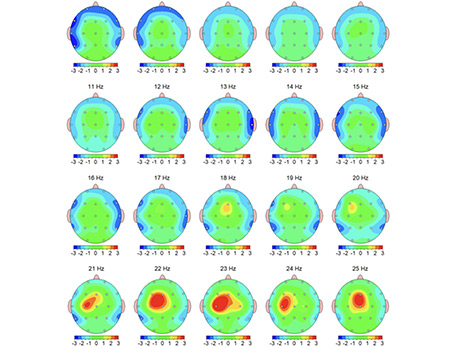
NeuroGuide allows for the comparison of qEEG data with the most reliable and accurate normative database, validated by scientific literature. NeuroGuide is compatible with multiple qEEG evaluation systems, including ProComp and Mitsar.
NeuroLogic is proud to be a distributor for NeuroGuide
FAQ
Questions & Answers
Neurofeedback is applicable across a wide range of areas. However, as with any therapeutic approach, there are both indications and contraindications. The following is a non-exhaustive list based on current research, scientific literature, and our clinical experience.
INDICATIONS:
Neurodevelopmental disorders like ADHD, learning disorders, autism spectrum disorder (ASD)
Emotional and behavioral disorders including anxiety, depression, PTSD, OCD
Other conditions such as epilepsy, sleep disorders, traumatic brain injury, chronic pain, tinnitus, neurodegenerative diseases…
CONTRAINDICATIONS:
Cognitive or developmental challenges that impair the ability to understand training objectives or actively participate in sessions.
Severe anxiety, panic, or psychotic traits specifically triggered by neurofeedback equipment.
In all cases, qEEG-based Neurofeedback should only be conducted by a qualified and experienced professional, working in close collaboration with licensed healthcare providers.
Please note: Neurofeedback is not a medical treatment unless provided by a licensed physician.
To integrate neurofeedback into your professional practice, it is essential to begin with rigorous training recognized by an independent organization in the field of neurofeedback (the BCIA).
You will also need to get equipped with appropriate tools that support training methods shown to be effective in scientific literature.
Your learning journey unfolds in two key phases: the discovery and practice phase, followed by the phase of autonomy and expertise.
At NeuroLogic, we offer a structured training pathway that enables you to implement neurofeedback into your practice quickly and effectively. Our goal is to provide the highest level of guidance, helping you build your own expertise confidently and at your own pace, while ensuring the best possible training for your clients.
With our NeuroTECH training, you will learn how to perform qEEG evaluations and design optimal training strategies. Data analysis and protocol development are supported either through our expert services or personalized mentoring. You can read more about these options on our Services page.
Looking to become fully autonomous and develop true expertise?
We recommend the NeuroPRO program—ideally after gaining some hands-on experience and perspective on the technique and its benefits. NeuroPRO deepens your expertise through theory, hands-on practice, and clinical case studies, giving you the skills to work independently and confidently.
To go even further, whether to explore specific application domains of neurofeedback or to stay current with scientific advances, NeuroLogic offers ongoing education through the NeuroMASTER modules.
You can review the objectives for each program on our website.
Want to learn more? Contact us, we’re here to help!
Yes, neurofeedback is supported by several professional accreditations and certifications that ensure the quality, safety, and ethical standards of practice. The most widely recognized international body is the Biofeedback Certification International Alliance (BCIA).
The BCIA offers a certification in Neurofeedback, (BCN) which is globally acknowledged and based on a standardized body of knowledge. It requires:
The completion of a didactic education program that meets BCIA’s curriculum standards
Supervised practical training (including mentoring, case reviews, and hands-on hours)
A written certification exam
Ongoing continuing education for recertification
At NeuroLogic, our training programs are structured to meet BCIA requirements. The NeuroTECH workshop is BCIA accredited for the mandatory 36 hours of didactic training, and the NeuroPRO course offers most mentoring hours.
This framework ensures that you receive training aligned with international standards.
NeuroLogic’s training programs are designed for healthcare professionals. Professionals from other fields in the helping professions are welcome to contact our team to discuss a tailored training pathway.
Neurofeedback – or “qEEG-based neurofeedback” – is a transparent and evidence-based technique supported by thousands of scientific publications. This approach requires a thorough evaluation, interpretation of the qEEG, the development of a personalized training protocol, and the application of training sessions conducted by a qualified and trained professional.
Dynamical neurofeedback, by contrast, is a so-called “automated” method. It relies on proprietary, undisclosed algorithms, and the same brain region is “trained” in every session. No evaluation is conducted before or during the process. This method does not account for individual differences and involves a completely passive experience for the client. It cannot be studied scientifically, as it lacks a transparent and verifiable methodology. These automated techniques (of which there are several) have not demonstrated efficacy and are not recognized as therapeutic tools within the framework of contemporary neuroscience.
For more detailed information, explore:
Our special edition of NeuroBLOG, which compares these methods
Our Webibrain session exploring the distinctions in depth
The NeuroTALK podcast episode dedicated to this topic
Still have questions? Contact us, we’ll be happy to help.
Every neurofeedback training program begins with an assessment of brain activity using a quantitative electroencephalogram (qEEG). Brain activity is recorded, and the data is then analyzed and interpreted. The results are presented as a brain map, accompanied by clear, engaging explanations designed to be accessible to both the client and collaborating healthcare professionals.
Based on this data, a personalized training protocol is established. A typical protocol includes around 15 sessions, generally conducted at a pace of two sessions per week. Each session lasts approximately one hour. For effective outcomes, most individuals complete 2 to 3 protocols, corresponding to about 25 to 40 sessions in total.
At the end of each protocol, a follow-up assessment is conducted to evaluate progress and, if necessary, design a new training protocol.
A final evaluation is performed at the conclusion of the full training process. For a complete program involving 2 to 3 protocols, this usually includes 3 to 4 evaluations in total.
A post-training follow-up evaluation is often scheduled around six months later to assess the consolidation of benefits and long-term outcomes.
The training programs offered by NeuroLogic are accredited by independent international bodies such as the BCIA. Our courses deliver rigorous, validated content, refined through 20 years of hands-on experience in the field.
At NeuroLogic, we proudly uphold our core values of transparency, scientific integrity, and mutual support. Our programs share everything we’ve learned, validated by both science and clinical practice, and we are fully committed to supporting your success in applying neurofeedback effectively.
In a sense, yes. Neurofeedback, also known as EEG biofeedback, is actually a specialized application of biofeedback. As such, both techniques share many theoretical and technical foundations.
In the NeuroTECH training program, you will explore several forms of biofeedback and learn about the value of multimodal training approaches.
In the NeuroPRO program, you will deepen your understanding of how different biofeedback methods can be applied based on functional difficulties and qEEG profiles—that is, according to individual patterns of brain activity.
Your path to independence depends on your initial background, the depth of training you pursue, and the complexity of the cases you plan to work with. At NeuroLogic, we structure our programs to guide you progressively toward full autonomy.
With the NeuroTECH training, you will acquire the theoretical foundations, learn to conduct qEEG assessments, and implement training strategies. At this stage, you will be able to practice with professional support, particularly for interpreting data and designing protocols. This phase ensures safe and effective clinical application while building confidence.
With the NeuroPRO training, you will learn to analyze EEG data independently, perform artifacting, interpret results, and develop personalized protocols. This program is designed to give you full clinical autonomy in neurofeedback practice.
Most learners reach a good level of autonomy after completing NeuroPRO—typically after a few months of training and hands-on practice. However, professional development continues well beyond initial training, especially as you encounter more complex cases.
To stay sharp, deepen your expertise, and remain up to date with the latest advances, the NeuroMASTER modules offer ongoing education focused on specific applications and neuroscientific developments.
In short:
NeuroTECH = supervised practice, growing independence
NeuroPRO = clinical autonomy
NeuroMASTER = continued growth and specialization