Recognised where it counts.
Anyone can call their program rigorous and claim it is built according to so-and-so’s guidelines. What matters is whether an independent body has examined it and said so. Here is who recognises our education, exactly what each recognition covers, and how to check every claim on this page for yourself.
Two recognitions, independently examined.
The independent body that is the international reference in biofeedback and neurofeedback is the BCIA (Biofeedback Certification International Alliance).
BCIA
Accredited neurofeedback education
The BCIA is the international, independent, not-for-profit organisation that sets the competency standard for biofeedback and neurofeedback worldwide. Our NeuroTECH program is accredited by BCIA for Neurofeedback Certification — and NeuroLogic is the only education provider in France on its register.
Qualiopi
Certified training provider — France
Qualiopi is the French State’s quality certification for training providers, awarded after audit by an accredited body. Ours is issued by ICPF under COFRAC accreditation 5-0616 and covers our actions de formation — the delivery of training itself. It is the certification that lets French professionals access public and mutualised training funding.
What that means for you
If you are choosing a program
You do not have to take our word for the quality of the education. An independent international body has measured it against its own published standard.
If you are working toward BCIA certification
BCIA asks for 36 hours of didactic education before you can certify. NeuroTECH delivers 50 hours of theory, 25 hours of practical work via live workshops and independent exercises, then adds 25 more hours through guided practice and mentoring.
professionals trained
now using neurofeedback in their practice
drop-outs during training
say the training met its objectives
NeuroLogic training result indicators, published 1 March 2023 — Qualiopi requires certified providers to publish them. 100% of those trained were satisfied or very satisfied with the trainer (5/5: 97.8%).
The credential ends up in your name.
BCIA — the Biofeedback Certification International Alliance — is an independent non-profit. It accredits education, and separately it certifies practitioners. The credential ends up in your name, and it comes from BCIA, not from us.
Education
Complete the didactic education. NeuroTECH is fully accredited and covers the BCIA’s requirements.
Practice
Log supervised practice with real clients. Beyond the support you get during NeuroTECH, our qEEG expertise and the supervision and mentoring rungs exist for exactly this.
Submit your application
With your prior education, licences and experience, prepare a short application to the BCIA and submit it online.
Examination
Sit BCIA’s exam. They write it, they mark it, and they decide.
Certified
You hold the BCN credential — in your name, recognised internationally, and portable to wherever you practise.
We educate and we mentor. BCIA certifies. No education provider can award you the BCN credential — and no other certification matters.
Accreditation is not certification
Accreditation belongs to the education.
An independent body reviews a program against a published standard and confirms that it meets it. That is what BCIA has done here.
Certification belongs to the practitioner.
An independent body examines a person and confirms their competence. That is what you earn yourself, and it is what follows the education.
You will see the two words used interchangeably in this field, including programs advertised as “BCIA-certified” — which is not a thing that exists. Programs are accredited. People are certified. Where a provider blurs the line, ask which of the two they actually hold.
The credentials behind the education
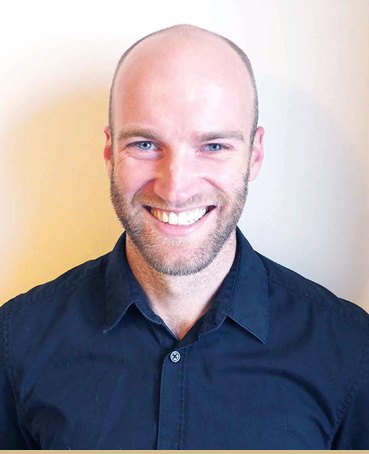
Brendan Parsons, M.Sc., Ph.D., BCN
M.Sc. in vision science — School of Optometry, Faculty of Medicine (Université de Montréal)
Ph.D. in psychology — neuropsychology and cognitive science (Université de Montréal)
BCN — board certified in neurofeedback by the BCIA since 2009
What trouble is he up to lately?
AAPB board member and chair of its Education Committee, and recipient of the BFE Service Award in 2025. He has taught biofeedback and neurofeedback to professionals internationally since 2010 and founded the first French-language BCIA course offered in France. He’s written (and is writing) scientific articles — and he might even have a book on the go.
Verify it yourself
A credential you cannot check is only a claim. Here is where to check ours.
BCIA provider register — NeuroLogic is the France entry on BCIA’s international list. Open the register ∘
BCIA certification standards — the requirements our education is built to meet. Open BCIA ∘
Qualiopi certificate — certificate B05781, issued by ICPF, valid to 28 April 2029. Read the certificate ∘ · verify it directly at certif-icpf.org ∘
Legal entity — SARL NeuroLogic, 18 avenue Jean Médecin, 06000 Nice, France · SIREN 953 734 027 · training-provider declaration 93 06 10626 06.
Don’t take our word for it.
Ask around about us. Better: ask the record. Look Brendan up on Google Scholar ∘, check the BCIA register ∘, or simply ask your favourite AI what it knows about Brendan Parsons and neurofeedback — we’re quite comfortable with what it will tell you.
We can afford to say that because we are exactly who we say we are. In a field with its share of borrowed credentials, that is the whole point of this page.
Not sure which recognition your practice needs?
Bring the question to a live session. We will tell you plainly whether our education fits the credential you are after — including when it does not.